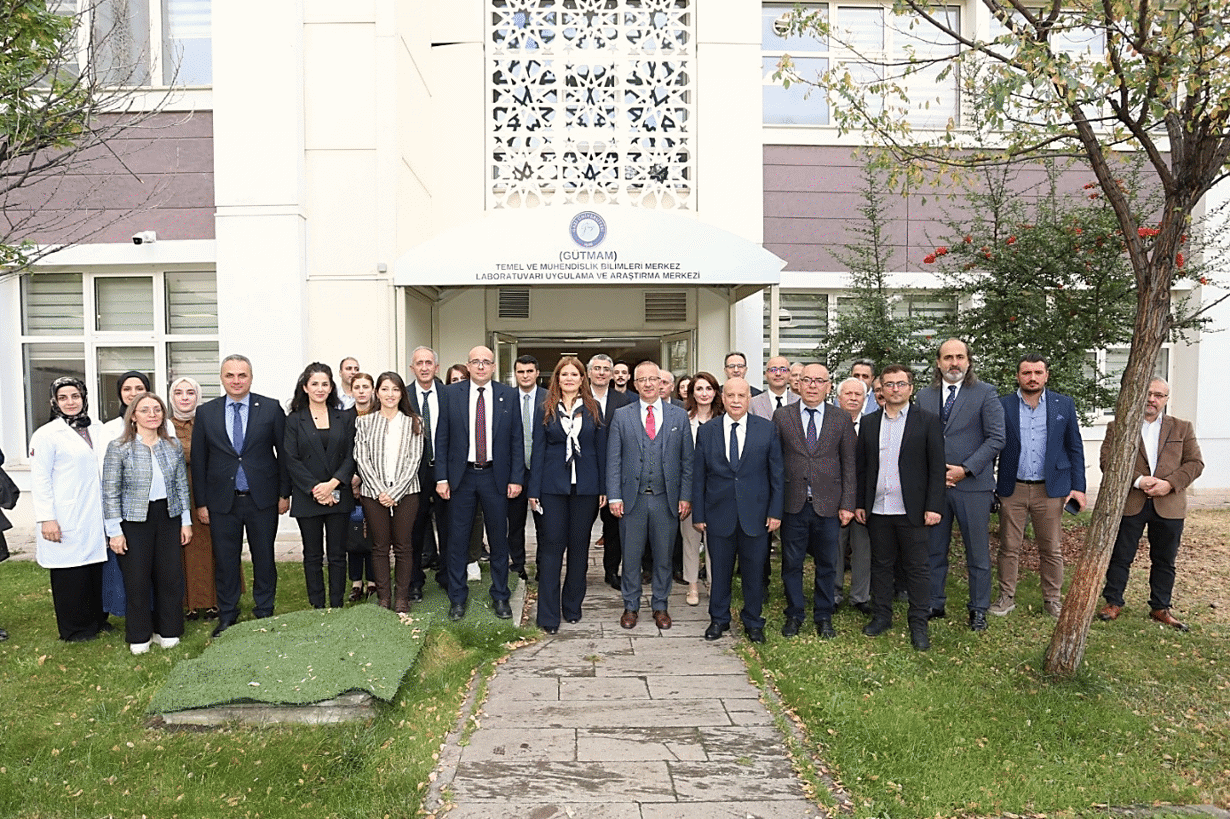
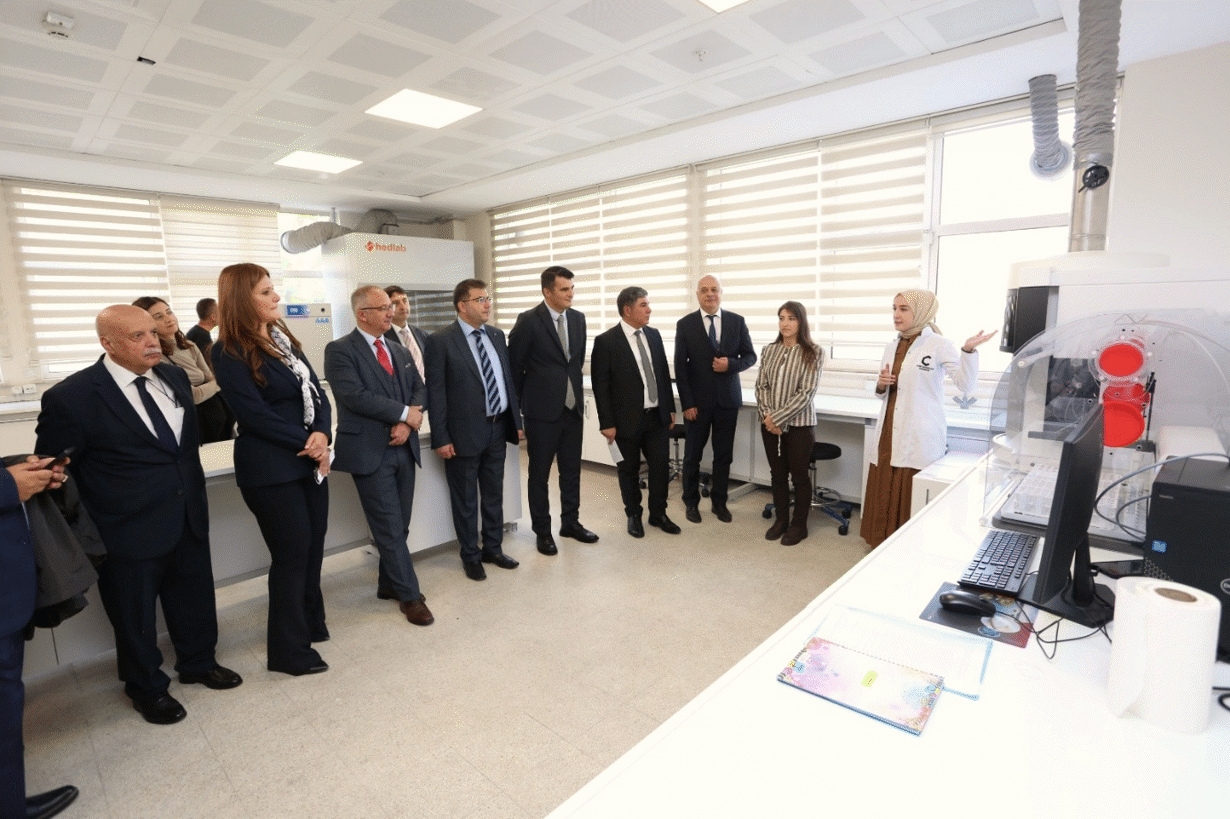
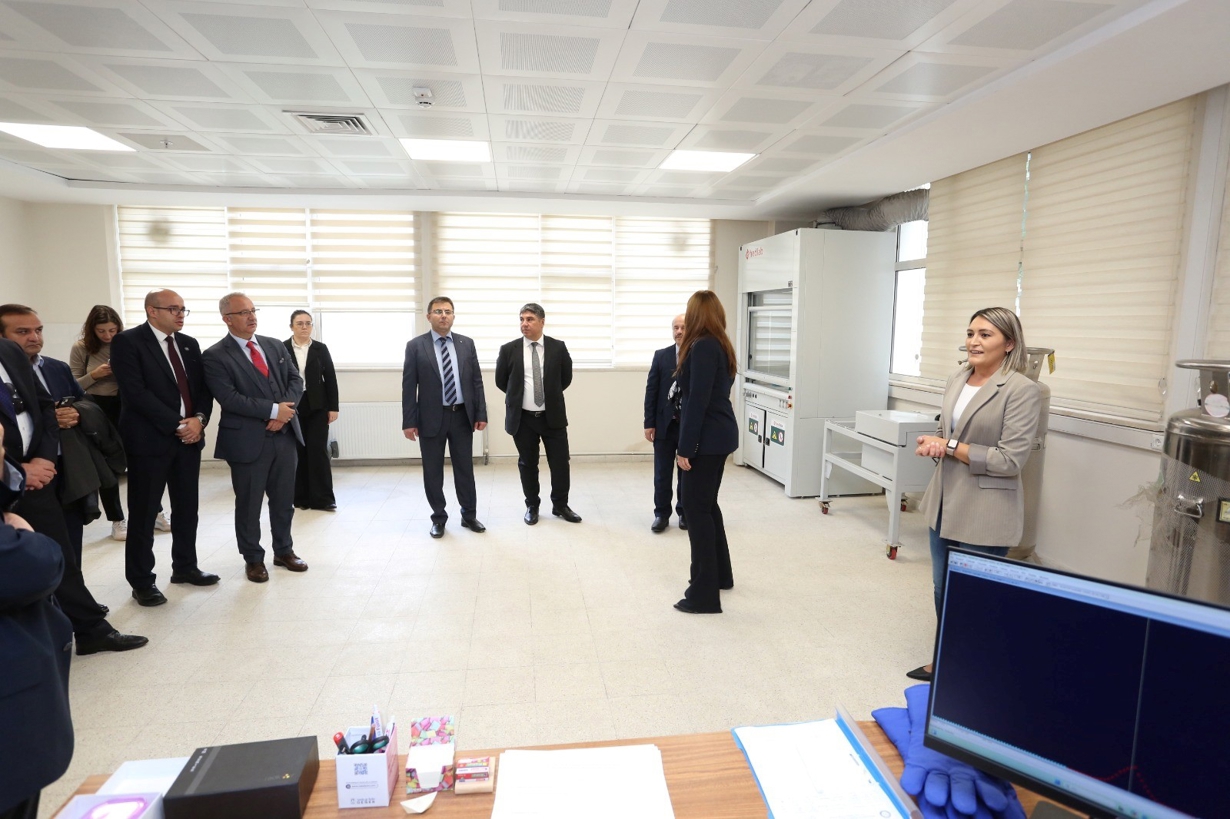
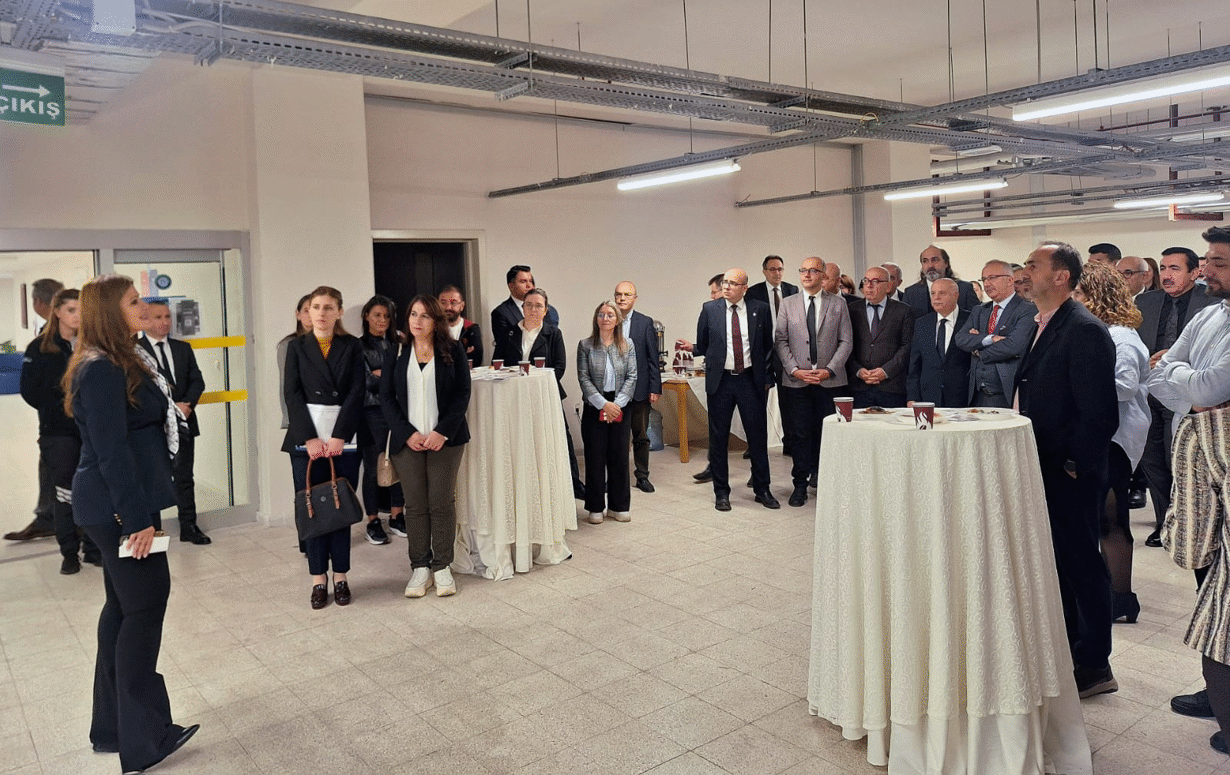
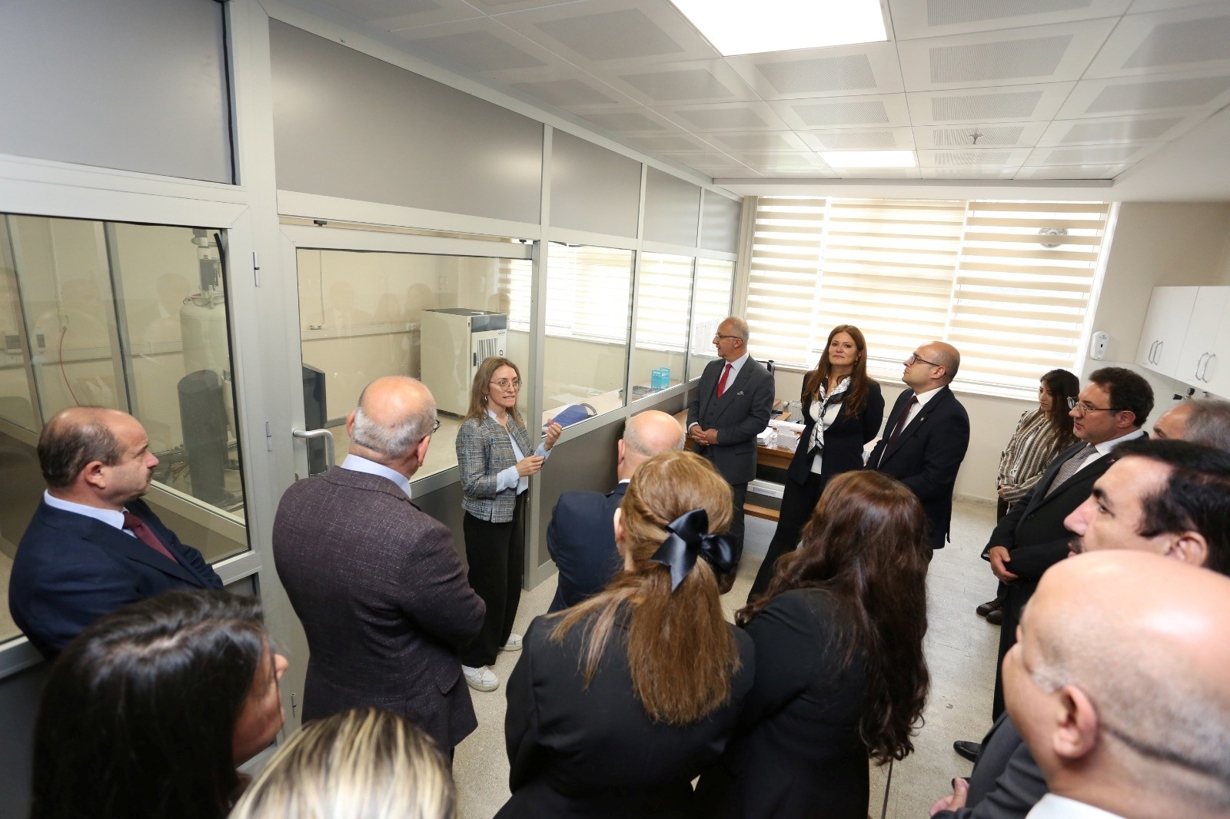
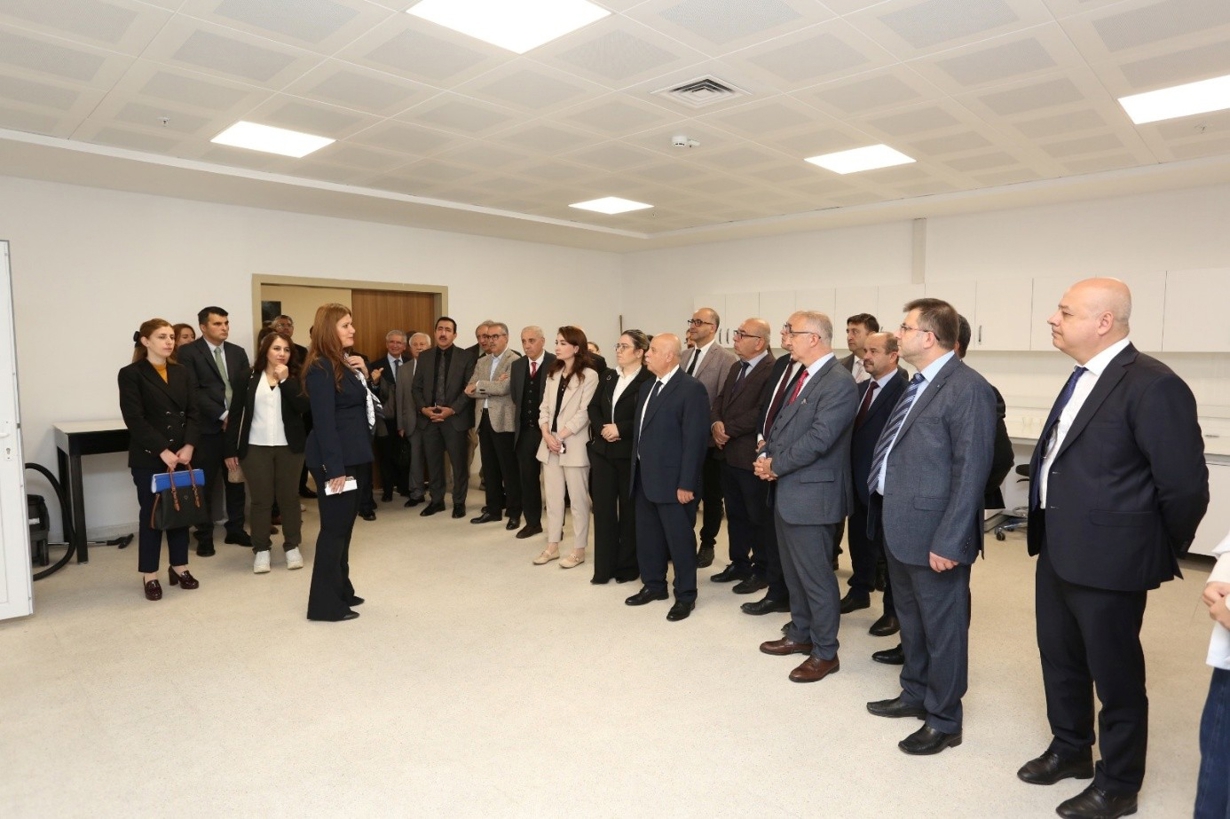
Gazi University Basic and Engineering Sciences Central Laboratory Application and Research Center (GÜTMAM) hosted representatives from the mining sector at an "Introductory Meeting with Mining Sector Representatives" organized to introduce its analysis and testing infrastructure for the mining sector.
The meeting was held on Wednesday, October 8, 2025, at the GÜTMAM campus. The event was attended by Gazi University Rector Prof. Dr. Uğur ÜNAL, Vice Rector Prof. Dr. Serhat KARYEYEN, GÜTMAM Advisory Board member and Director of the Institute of Science Prof. Dr. Uğur GÖKMEN, GÜTMAM Board member and Deputy Director of the Institute of Science Assoc. Dr. Murat BİLEN, Dean of the Faculty of Applied Sciences Prof. Dr. Barış KINACI, Deputy General Manager of Turkish Coal Enterprises (TKİ) Aslı DÜLGER, Deputy General Manager of Electricity Generation Inc. (EÜAŞ) Ahmet Suat ÜSTÜN, sector representatives, academics, and researchers. In her opening remarks, GÜTMAM Director Prof. Dr. Sema BİLGE OCAK stated that the advanced testing, analysis, and characterization capabilities offered by the center could make significant contributions to the mining sector. Prof. Dr. Ocak stated, “As GÜTMAM, we aim to both strengthen university-industry collaboration and contribute to the more efficient utilization of our country's natural resources.”
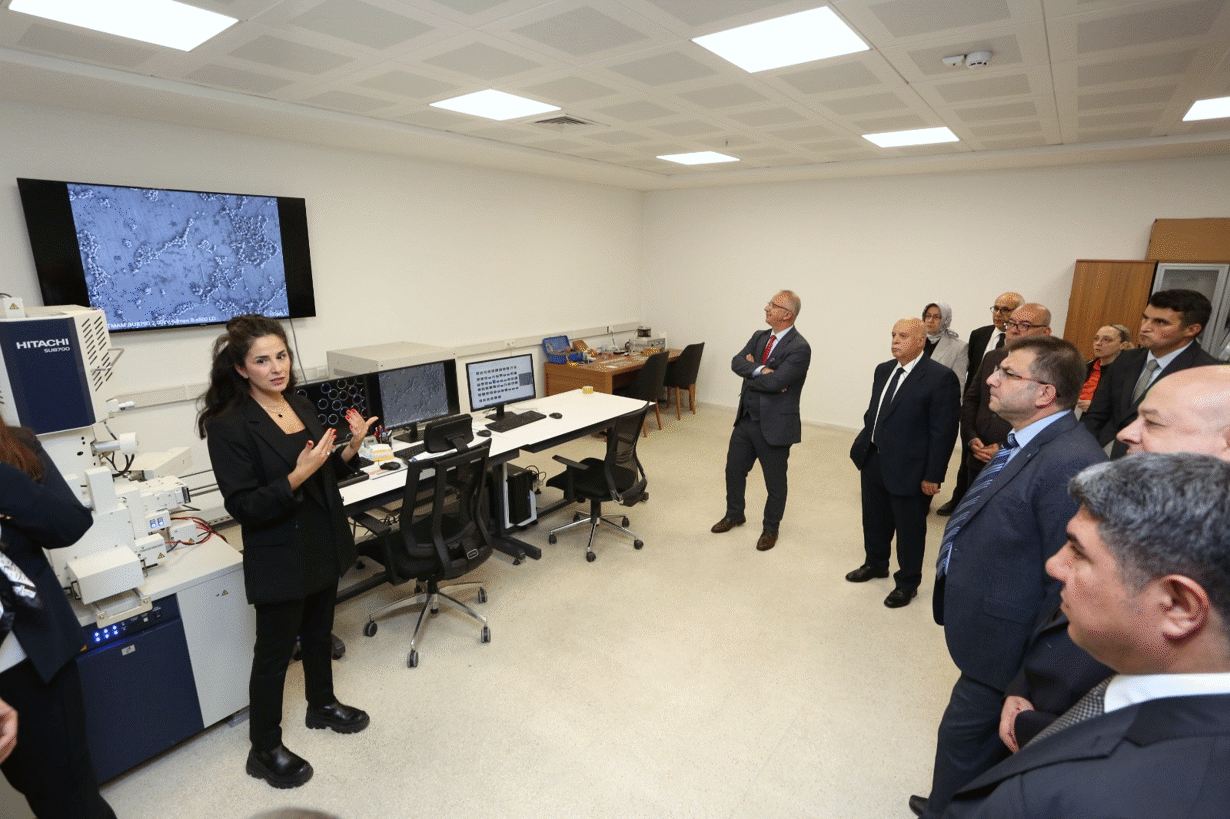
GÜTMAM houses the following laboratories: an Elemental Analysis Laboratory equipped with XRF, ICP-OES, BET, and density measurement devices; an Imaging Laboratory with an FE-SEM device offering advanced imaging capabilities and equipped with five detectors, including STEM; a Nuclear Magnetic Resonance (NMR) Laboratory; a Radioactivity Measurement Laboratory with a gamma detector serving the analytical needs of the food, environmental, and mining sectors; and Minerals and Boron Technologies Laboratories conducting R&D activities. These laboratories support research and development activities in many fields, primarily in science and engineering.
GÜTMAM operates as a comprehensive R&D center that provides solutions not only for academic research but also for the needs of industry and the private sector. The center provides consultancy, analysis, and technical support services within the framework of university-industry collaboration in strategic areas determined in line with national development goals. In this respect, it aims to contribute to economic growth on both regional and national scales.
GÜTMAM's strong technical equipment serves as a key bridge in transferring scientific knowledge to technology and production.
GÜTMAM not only serves the sector but also supports postgraduate student studies and scientific projects. Many students undertake internships and part-time activities at the center, and many scientists conduct projects supported by TÜBİTAK and public institutions.
The center consists of the following laboratories, supporting scientific research and industrial projects in many fields such as materials science, chemistry, physics, nanotechnology, energy, environment, biotechnology, and mining:
1. Elemental Analysis Laboratory
This laboratory enables the determination of the elemental composition of materials with high precision.
Multi-element analysis of liquid samples can be performed using an ICP-OES (Inductively Coupled Plasma Optical Emission Spectrometer) (Analytik Jena 9100) instrument. Determination of alkali and alkaline earth metals, heavy metals, rare earth elements, and lanthanides is possible. This system is widely used in environmental analyses, water quality, food safety, metal content determination, and biological sample analysis.
Equipped with an X-ray Fluorescence (XRF) (Rigaku ZSX Primus IV) instrument, this laboratory can analyze all elements from boron (B) to uranium (U) in solid, liquid, powder, and film samples. The instrument is widely used in mining, metallurgy, glass, ceramics, cement, and petrochemical industries for determining surface coating thickness and composition. The automatic sample changer feature ensures high efficiency in multiple analyses.
The laboratory is equipped with a Brunauer–Emmett–Teller (BET) (Micromeritics 3Flex) instrument capable of measuring the surface area and pore distribution of bulk and powder materials. Using gas adsorption isotherms, it determines the surface area, pore size, and distribution of materials. This analysis provides critical information for nanomaterials, catalysts, carbon-based structures, ceramics, and pharmaceutical formulations.
The automated density measuring device (Micromeritics AccuPyc II 1350) measures the true volume and density of solid and powder materials with high precision using the helium gas displacement principle. It is widely used in the ceramics, polymers, battery materials, and pharmaceutical industries.
2. Imaging Laboratory
At the heart of the laboratory is the FE-SEM (Field Emission Scanning Electron Microscope - HITACHI SU8700), which allows for the examination of surface morphology and structural details at the nanometer scale.
The integrated EDS (Energy Dispersive X-ray Spectroscopy) system enables elemental analysis and elemental mapping of images. This laboratory is critical for quality control and R&D studies in the fields of materials science, metallurgy, biology, geology, and nanotechnology. In addition, STEM (scanning transmission electron microscopy) allows for the detection of transmitted electrons in the sample, enabling imaging in transmission mode. This allows for the visualization of the internal structure, density differences, and nanometric-level details of the samples.
3. NMR (Nuclear Magnetic Resonance) Laboratory
Equipped with a Bruker Ascend 500 MHz instrument, this laboratory offers one of the most powerful techniques for determining the molecular structures of organic and inorganic compounds. NMR spectroscopy is used for substance identification, mixture component analysis, and molecular structure determination. High-resolution results are obtained in many fields, such as drug development, polymer chemistry, and biomolecular studies.
4. Radioactivity Measurement and Analysis Laboratory
The laboratory performs radioactive isotope determination in environmental, geological, food, and building materials using an Ortec HPGe (High Purity Germanium) Detector Gamma Spectrometer. The activity concentrations of naturally occurring radionuclides such as 226Ra, 232Th, and 40K in samples are measured with high precision. These analyses provide reliable data in radioecological research, mining, geology, archaeology, and food safety.
The main types of samples analyzed in the laboratory using gamma spectroscopy are:
• Soil, rock, and mineral samples: Determining the natural radioactivity levels of geological structures and analyzing the radioactive properties of minerals.
• Water and environmental samples: Measurement of radionuclide concentrations in drinking water, lakes, and groundwater.
• Food samples: Assessment of radionuclide contamination in agricultural products.
• Building materials: Measurement of natural radioactivity in materials such as stone, marble, and granite used in the construction industry.
• Waste samples: Detection of radioactive content in industrial and medical waste.
Detectable Radioisotopes: The main naturally occurring radionuclides most frequently measured in analyses performed at GÜTMAM are:
• From the U-238 series: Ra-226, Pb-214, Bi-214
• From the Th-232 series: Ac-228, Pb-212, Tl-208
• K-40 (Potassium-40)
In addition, environmentally or artificially sourced isotopes (e.g., Cs-137, Co-60) can also be analyzed.
Application Areas: Gamma spectroscopy has a very wide range of applications:
• Geological and mining analyses: Determining the uranium, thorium, and potassium content in ores.
• Environmental radiation monitoring: Monitoring radioactivity levels in soil, water, and the atmosphere.
• Archaeometric dating: Using gamma radiation to determine the age of archaeological finds.
• Food safety and health physics: Monitoring natural and artificial radionuclides in food.
• Building materials safety: Performing radiation dose and risk analysis on construction materials.
5. Minerals and Boron Technologies Laboratory
This laboratory focuses on studying Turkey's rich mineral resources, particularly boron minerals, using advanced technologies.
The physical and chemical properties of mineral structures are determined using modern analytical techniques.
The laboratory aims to develop solutions specific to the mining sector and to conduct R&D studies on boron and rare earth elements.
6. Raman Spectroscopy Laboratory
The WITec Alpha 300 R Raman Microscope offers the possibility of determining the chemical structures of materials without distortion through laser-based spectroscopic analysis. Thanks to its confocal Raman imaging capability, high-resolution chemical maps of samples can be created. This system is used for materials science, biotechnology, polymer research, and pharmaceutical product analysis.
At the end of the event, industry representatives expressed their opinion that GÜTMAM's infrastructure will make significant contributions to the sector by improving the quality of analysis in mining. Confocal Raman is preparing to serve researchers and industry stakeholders at full capacity in the near future.